

Have you ever wondered about the difference between cocoa and chocolate while sipping a warm cup of cocoa or enjoying a piece of chocolate melting in your mouth? Many confuse the two, yet although both come from the same source, the real difference lies in the manufacturing stages, ingredients, and even in their nutritional value and their impact on your health and mood.
In this guide, you will learn in a simple and clear way the difference between cocoa and chocolate, to understand what makes each of them unique. You will also discover their various uses in your daily life, and how you can choose the most suitable option for your health and lifestyle without giving up the pleasure of the rich taste you love.
What is the difference between cocoa and chocolate?
| Comparison Point | Cocoa | Chocolate |
|---|
| Source | Cocoa tree beans in their raw or semi-raw form | A processed product derived from cocoa |
| Definition | A natural substance extracted as powder or butter | A mixture of cocoa, sugar, milk, and other additives |
| Processing level | Less processed and purer | More processed and goes through multiple manufacturing stages |
| Ingredients | Cocoa powder + cocoa butter | Cocoa + butter + sugar + milk + flavorings |
| Taste | Bitter and possibly acidic | Sweet and balanced or rich depending on the type |
| Texture | Dry (in powder form) | Smooth and creamy |
| Usage | Baking and beverages | Desserts, decoration, and direct consumption |
| Nutritional value | Rich in antioxidants | Contains more sugar and fat |
| End Result | Basic raw material | Finished product ready for consumption |
How do cocoa and chocolate manufacturing methods differ?
Both cocoa and chocolate begin their journey from the same place: the fruits of the cocoa tree. After harvesting the pods, the beans are extracted and placed in boxes or under banana leaves to ferment for three to seven days. During this stage, the composition of the beans changes internally, and distinctive flavors develop, while antioxidants, which give cocoa its healthy value and unique taste that distinguishes it from other sweet ingredients, increase.
-
Roasting and Processing Degree
The fundamental difference appears in the roasting stage. Raw cocoa is roasted at low temperatures not exceeding 48°C, with the aim of preserving sensitive nutrients such as vitamins and active compounds. However, when manufacturing chocolate or what is known as industrial cocoa, higher roasting temperatures are used to develop the flavor and remove some bitterness, but this heating, in turn, leads to a loss of some nutrients.
-
Final Industrial Procedures
When the beans are ground after roasting, cocoa powder is produced, which can undergo alkaline processing to adjust acidity and make the taste smoother. Chocolate manufacturing, however, goes through additional steps, as cocoa mass and cocoa butter are mixed with sugar and sometimes milk, then the ingredients are ground for long hours in a process known as "conching" until the texture becomes smooth and homogeneous. After that, the mixture is poured into special molds and cooled until it solidifies, to take the shape and taste you know in different chocolate bars, which clarifies the difference between cocoa and chocolate in terms of manufacturing method and ingredients.
How does the nutritional impact differ between cocoa and chocolate?
Cocoa is characterized by a high concentration of phenols and polyphenols, which are natural plant compounds that act as powerful antioxidants. These compounds contribute to resisting free radicals within the body, reducing the risk of chronic diseases such as heart disease and some types of cancer. In chocolate, especially those with low cocoa percentages, these properties significantly decline due to manufacturing processes and the addition of ingredients that reduce the concentration of active compounds.
-
Fats and Sugar
The fats in cocoa are essentially beneficial natural fats, accompanied by a good amount of fiber that helps improve digestion and regulate blood fat levels. In contrast, most commercial chocolate types contain added fats and high sugars, which increases their caloric content and makes them less nutritionally beneficial. This difference alone is enough to make cocoa a more nutritious option, especially when consumed without additives.
-
Health Effects and Benefits
Dark chocolate with 70% cocoa or more retains most of the benefits of cocoa; it helps improve blood flow, lower blood pressure, and supports heart health thanks to its natural antioxidants. Milk or white chocolate, however, often lack these benefits because they contain less cocoa and larger amounts of sugar and fats, which reduces their health value. Additionally, pure cocoa positively impacts blood sugar control and improves the body's lipid profile, while sweetened chocolate can lead to weight gain and elevated sugar levels, which highlights the difference between cocoa and chocolate from a health perspective.
-
Precautions and Avoiding Excess
Despite the nutritional benefits of cocoa and dark chocolate, excessive consumption of either can cause negative effects such as digestive disorders or elevated blood pressure. Diabetics should also be cautious, especially with low-cocoa, high-sugar varieties that can rapidly raise glucose levels. Therefore, moderation is key to benefiting from cocoa's properties without exposure to its potential harms.
How are cocoa and chocolate used today?
Cocoa powder is today one of the most widely used ingredients in hot beverages, especially for those looking for a deep flavor without added sugar. You can use it to prepare a warm cocoa drink in the morning or add it to smoothies to give them natural energy and flavor. Cocoa is also used in healthy baked goods and protein bars, and even in seasoning meats or sauces to add an unexpected touch that combines bitterness and depth of flavor.
Chocolate in Desserts and Occasions
Chocolate in its various forms is the foundation of the dessert world. It gives tarts, pralines, and chocolate cakes an irresistible rich taste. It is served at social events, holidays, and even as gifts that express taste and care. The presence of chocolate in hospitality symbolizes luxury and celebration, as it completes the scene with its elegance and unique deliciousness.
Modern Uses in Restaurants and Luxury Experiences
In recent years, luxury restaurants around the world have embraced innovative ways of using chocolate that go beyond traditional desserts. For example, it is blended with local ingredients such as kanafeh or pistachios in the Middle East, to offer a new experience that combines authenticity and innovation. These unexpected blends transform chocolate into an artistic element in dishes, enjoyed by connoisseurs and lovers of distinction in fine and exceptional dining experiences, which reflects an aspect of the difference between cocoa and chocolate in modern uses and culinary arts.
What are the best luxury chocolate boxes offered by Verona store?
Verona store in Kuwait is known for offering the finest types of chocolates and savory snacks, combining high quality and elegant design in every product. The store provides luxurious chocolate boxes, hospitality trays, Arabic sweets, and favors suitable for all occasions and gifts, to give you a complete experience that combines refined taste and a balance of rich flavors. Discover the most prominent products in the Chocolate Boxes section.
Belgian Chocolate Box, 63 pieces

The Belgian Chocolate Box with 63 pieces includes a selection of the finest Belgian chocolates, made from high-quality pure cocoa that gives you a smooth texture and a balanced taste between sweetness and depth. It features elegant packaging suitable for formal gifts and special occasions, allowing you to taste the real difference between cocoa and chocolate in every piece.
Gift Chocolate Box, 61 pieces
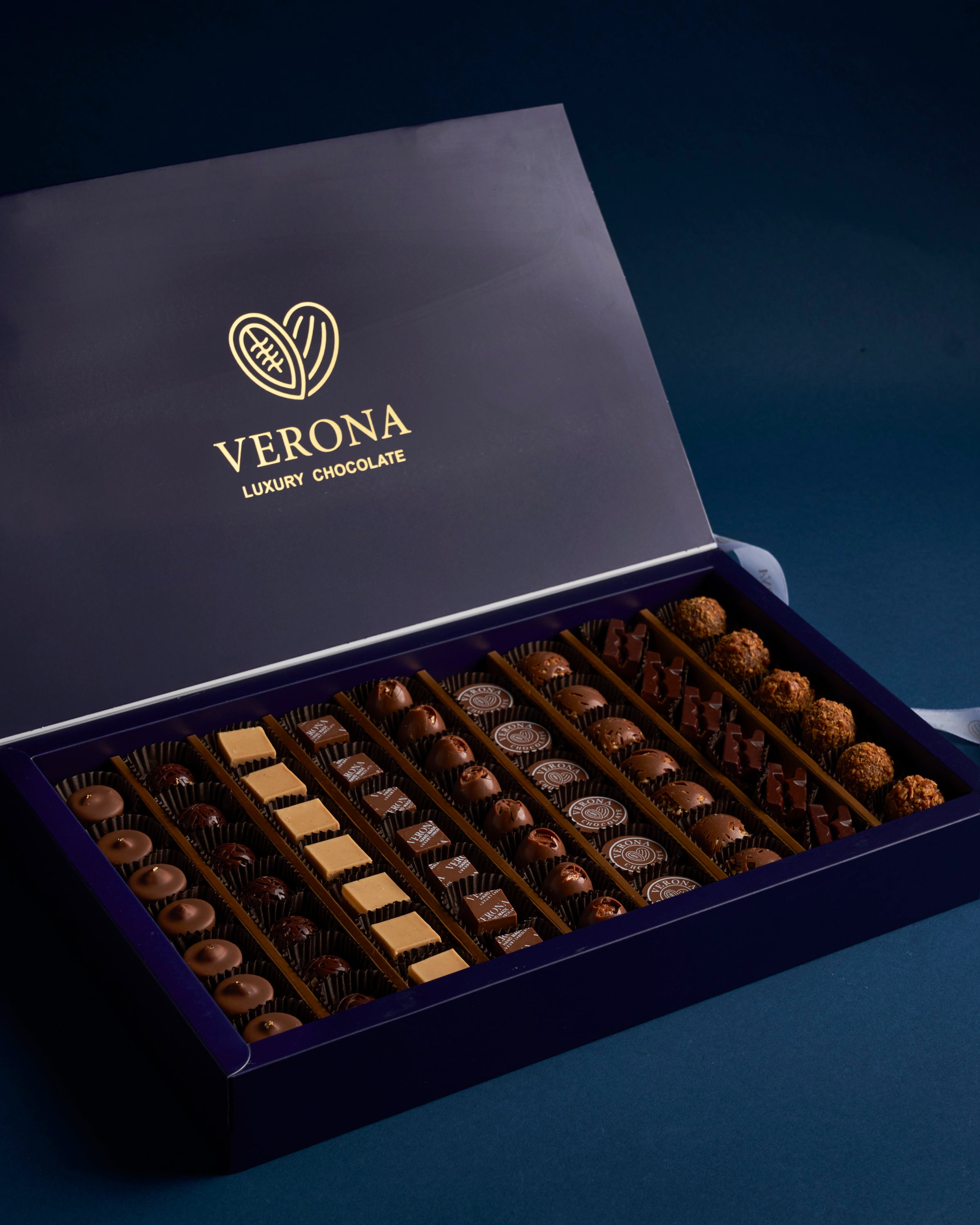
If you are a fan of dark chocolate and strong cocoa flavor, then the 61-piece Gift Chocolate Box is specially designed for you. It contains an assortment of highly pure dark chocolates that highlight the rich difference between cocoa and chocolate in terms of taste and nutritional benefit. It comes in an elegant arrangement that combines simplicity with luxury, making it a sophisticated gift for lovers of concentrated flavors.
Chocolate Distribution Tray

The Chocolate Distribution Tray from the Distribution section includes various types of chocolates and luxury favors to add a sophisticated touch to your hospitality. It blends the splendor of flavor with the quality of ingredients, to create an experience that combines excellence in presentation and the pleasure of tasting the difference between cocoa and chocolate.
Frequently Asked Questions About the Difference Between Cocoa and Chocolate
What is the difference between cocoa and chocolate?
Cocoa is the raw product extracted from cocoa beans after roasting and grinding, characterized by its bitter taste and high nutritional value. Chocolate, on the other hand, is a manufactured product to which sugar, cocoa butter, and sometimes milk are added, giving it a sweeter and more varied taste.
Which is healthier: cocoa or chocolate?
Pure cocoa is the healthier choice because it is rich in antioxidants and free from added sugars. Dark chocolate (70% cocoa or more) is a good option, while milk and white chocolate offer fewer benefits.
Is dark chocolate good for the heart?
Yes, dark chocolate with a high cocoa content helps improve blood circulation and lower blood pressure, thanks to its beneficial flavonoid compounds for heart health.
Conclusion
The difference between cocoa and chocolate comes down to the manufacturing method, type of ingredients, and nutritional impact of each. Therefore, be sure to choose what suits your needs, whether you are looking for energy or higher nutritional value, and enjoy the rich flavor consciously and with balance.
Sources Used


